 Categories
 ATEX 22
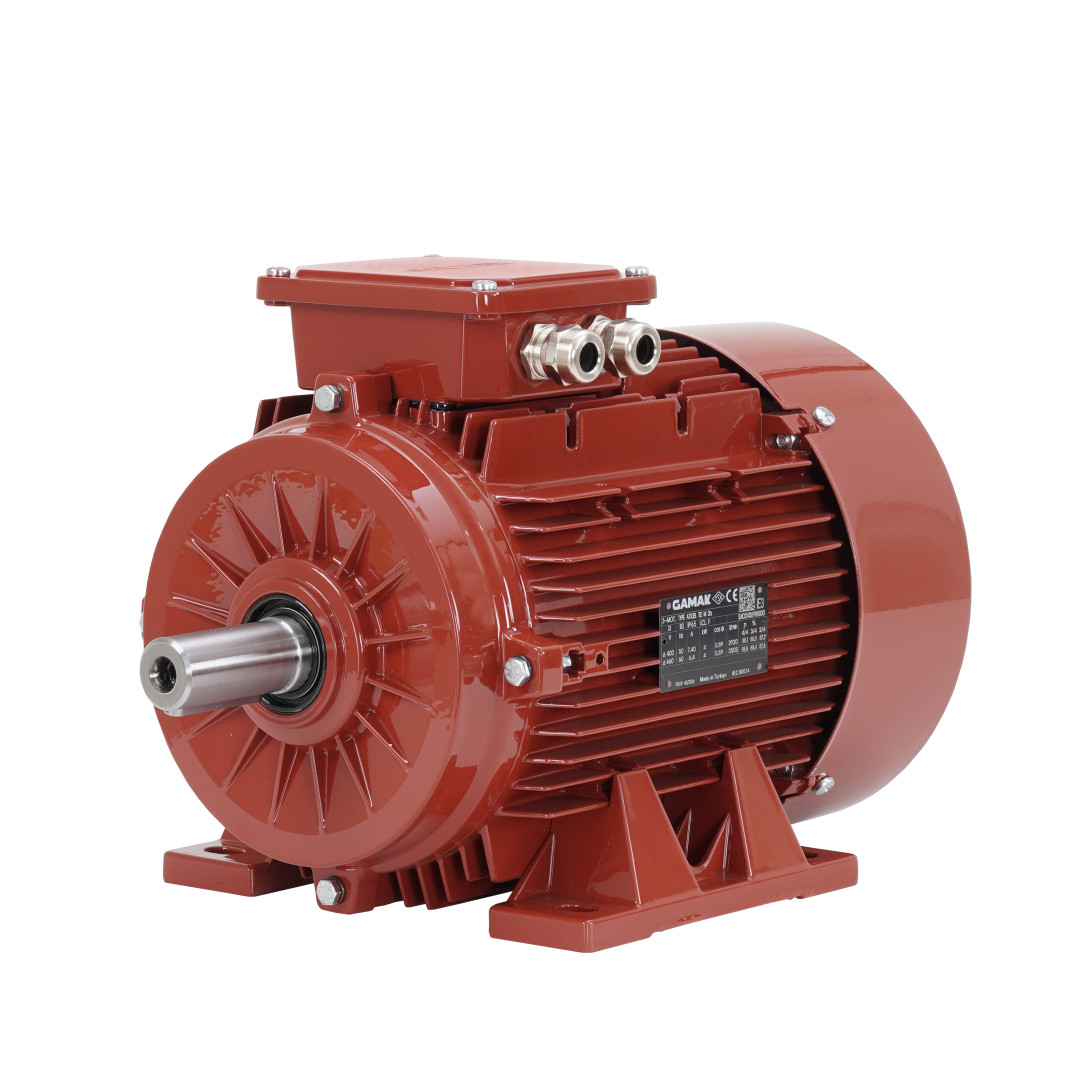
ATEX 22 motors are specially designed to ensure safe and sustainable operating performance in industrial environments with explosive dust. In these areas, which are classified as Zone 22, it is critical that the motors used meet international safety standards, as dust can cause ignition risk even for short periods and at low concentrations. Gamak ATEX 22 motors stand out as a technical solution that offers a high level of protection in terms of both mechanical strength and electrical safety in these harsh environments.
What is an ATEX 22 Motor?
An ATEX 22 motor is an electric motor specifically designed for Zone 22 class explosive atmospheres where flammable or conductive dust can be present in the air for short periods of time or at low concentrations. These motors are manufactured with specific temperature limits, sealing structures and protection classes to prevent dust accumulation from creating an ignition risk on the motor surface. These devices, called ATEX 22 motors, contain technical solutions to prevent external dust from entering the motor, accumulating or creating an ignition source during operation. In order to maintain safe operation in industrial plants, only motors complying with this class should be used in Zone 22 areas.
Differences between ATEX 22 and Other ATEX Zones
ATEX classification is a critical safety system that allows explosive atmospheres to be separated by risk level, enabling the correct selection of equipment. ATEX Zone 22 refers to areas where explosive dust is present in low concentrations for only short periods of time, while other zones cover much higher levels of hazard. The main differences between these zones are as follows:
- Zone 20: Areas where explosive dust is in the air continuously or for long periods of time.
- Zone 21: Areas where the risk of dust explosion occurs periodically, with dust clouds forming from time to time.
- Zone 22: Areas where dust only occurs briefly and momentarily, and where the risk of explosion is low but present.
This classification allows engineers to identify the motor with the appropriate protection class and surface temperature limit for each zone. Even in Zone 22, which appears to be particularly low risk, the wrong choice of equipment can seriously undermine process safety. Therefore, a proper understanding of the differences between ATEX zones is critical for both production safety and equipment life.
What are the Technical Specifications of ATEX 22 Motors?
ATEX motors are electrical machinery with a special protection class designed to ensure safe operation in production facilities where there is a risk of dust explosion. The basic technical requirements for these motors include surface temperature control, sealed frame construction and terminal boxes reinforced against dust ingress. The insulated materials used and the cooling structure allow the motor to perform stably in hazardous areas for a long time. In addition, the shielded arrangement of the terminal connections increases the safety level by reducing the possibility of sparks being generated during operation.
Power Ranges of Gamak ATEX 22 Motors
Gamak ATEX 22 motors are manufactured in a wide power range from 0.55 kW to 500 kW to safely operate different types of process machinery in dusty environments with explosion hazard which are classified as Zone 22. This range allows the creation of solutions at the same safety class for both low-power mixer-transfer equipment and high torque production machinery. The wide range of power levels facilitates the selection of motors suitable for different load profiles, especially in industries where there is a risk of dust-induced explosion, such as flour, grain, wood, plastics and textiles.
Efficiency and Protection Classes of Gamak ATEX 22 Motors
The protection classes of ATEX 22 motors define the level of resistance of the motor against external influences in dusty and potentially explosive environments. The IP protection level used in these motors indicates that the enclosure is completely sealed against dust ingress and prevents dust accumulated on the outer surface from reaching the internal components. Surface temperature classes are also an important part of the protection structure. Ensuring that the external surface of the motor does not exceed a specified temperature limit prevents the ignition of explosive dust. In addition, the sealed design of the terminal box, bearing and cooling components ensures safe operation of the motor in actual field conditions.
Frame Sizes of Gamak ATEX 22 Motors
The frame sizes of Gamak ATEX 22 motors are configured from 71 to 355 according to the torque requirement, thermal load and mechanical assembly layout of the Zone 22 process to which the motor will be used. An aluminum frame between 71-250 is preferred in low and medium power ranges due to its light weight and heat conduction advantage, while the cast iron frame between 280-355 provides the rigidity and vibration resistance required at high power. Determining the frame size is critical for the surface temperature management of the motor because the thermal capacity of the frame in ATEX 22 class directly affects the safe maintenance of the T135°C limit. In addition, the frame size determines mounting parameters such as shaft diameter, flange type and load transfer geometry, allowing the motor to fit into different installation layouts such as B3, B5, B35, B14.
Where Are ATEX 22 Motors Used?
ATEX 22 motors are used in industrial plants where flammable or conductive dust is likely to become airborne during the production process or the handling of materials. These motors are especially preferred to minimize the risk of ignition of fine dust clouds in flour and grain mills, silos and packaging lines. Zone 22 class motors become mandatory due to the dry sawdust and fibrous dust generated in wood processing plants, CNC chip extraction systems and furniture production lines. In plastic recycling, granule production and material drying applications, ATEX 22 motors ensure safe operation in lines with light dust accumulations prone to static charging. In addition, in cotton, linen, rayon and textile fiber processing plants, these motors are used as a standard solution for safety in both conveyor systems and auxiliary equipment due to the short-term suspension of volatile fibers in the air.